A self-empty cordless vacuum is worth it only if convenience changes your cleaning habits
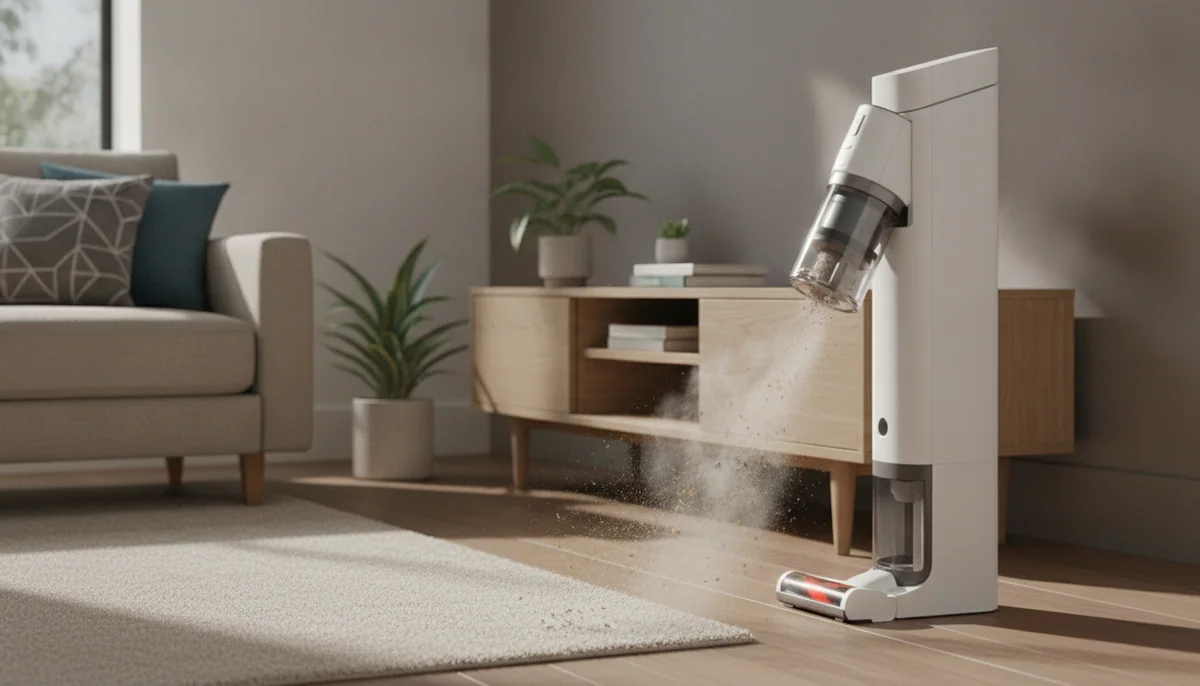
A self-empty dock solves one small problem extremely well: it clears the cordless vacuum’s tiny dust cup when you put the machine away. That sounds frivolous until the ordinary sequence of finding the vacuum, checking its charge, discovering a full bin, emptying it and cleaning up the dust cloud becomes the reason nobody tackles the crumbs under the table.
The feature earns its keep when removing that sequence makes cleaning more likely. Owners of the Shark Detect Clean & Empty IW4624 repeatedly describe the dock as something they had not expected to value, then say it encouraged them to vacuum more often because the machine was charged and empty whenever they reached for it. That behavioral change is the strongest case for self-emptying, and it matters more than the spectacle of watching debris disappear into a larger container.
The catch is right there in the name. “Self-empty” describes a transfer from one bin to another, not a vacuum that maintains itself. You still empty the base, wash and dry filters, inspect airways, remove trapped debris and occasionally clean the brushroll. The dock reduces how often your hands meet the small dust cup; it does not dismiss you from vacuum ownership.
Pay for it if
- You vacuum in brief, frequent bursts rather than one scheduled whole-home session.
- Pet hair or tracked debris fills a small cordless bin quickly.
- Dust exposure during manual emptying is a recurring nuisance.
- Bending, twisting or opening a compact dust cup is physically difficult.
- A freestanding charging base would keep the vacuum visible and ready.
Skip it if
- You already empty the bin after every use without resentment.
- You want the smallest possible appliance footprint.
- You expect the dock to eliminate filter and airway maintenance.
- Your main task is sustained deep cleaning on thick carpet.
- You value simple construction and long-term repairability above convenience.
The dock buys readiness, not cleaning power
Separate the vacuum from its base when judging value. The floorhead, motor, battery and airflow determine what reaches the dust cup. The dock merely receives what the vacuum has already collected. A mediocre cordless machine does not become a strong cleaner because it can empty itself with theatrical enthusiasm.
This distinction matters because self-empty models are often sold as complete systems. Their feature lists combine automatic evacuation, charging, filtration, floor detection, lighting and brushroll claims into one glossy promise. Only the first two functions belong to the dock. Everything else must still be assessed as part of the vacuum itself.
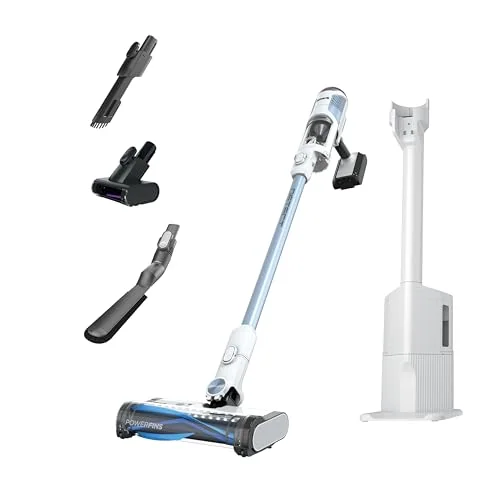
The IW4624 makes the division unusually clear. Exact-model owners praise its light handling, automatic response when moving between hard floors and rugs, useful headlights and everyday pet-hair pickup. The captured bundle also includes a motorized hand tool and a duster-crevice tool. Those are reasons to consider this particular vacuum; the dock is not entitled to take credit for them.
The reverse is equally important. A self-empty base cannot fix the limits of cordless cleaning. Shark’s stated maximum of up to 60 minutes for this model was measured in Eco mode at the hand vacuum, without powered floor cleaning. Carpet resistance, a powered nozzle and stronger settings should all be expected to reduce that figure. If your normal job is a long session across deep carpet, the right question is not whether the bin empties automatically; it is whether a cordless stick should be your only vacuum. Our guide to when a stick vacuum can replace a full-size machine addresses that larger decision.
The convenience test
Imagine the dock vanished but the vacuum stayed. Would you still want that vacuum for its weight, pickup, floorhead, battery and tools? If the answer is no, the base is decorating the wrong machine. If the answer is yes, ask whether automatic emptying would change one of three things: how often you clean, how much dust you handle or how difficult it is to finish the job.
| Your routine | What the dock changes | Likely value |
|---|---|---|
| Daily crumbs, litter or pet hair | Resets the small bin after every short pass | High |
| Mobility makes bin emptying awkward | Removes a frequent bending and handling step | High |
| Manual emptying creates an irritating dust plume | Transfers debris into a larger enclosed base | Potentially high |
| One weekly whole-home clean | Saves one or two brief emptying stops | Low to moderate |
| Minimal storage space | Adds a permanent floor-standing appliance | Low |
| No objection to emptying a dust cup | Automates a task that was not causing friction | Low |
Frequency is the hidden multiplier. Saving a modest amount of effort once a month is barely a feature. Saving it after several quick cleanups every day can materially change the relationship between a household and its floors. Pet owners, families with young children and anyone living near sand, mud or shedding trees have more chances to benefit than a tidy one-person household that vacuums on Saturday morning.
Accessibility can make the same small mechanism disproportionately useful. Several IW4624 owners specifically valued the machine’s light handling, including one household dealing with mobility limitations. The dock does not make the vacuum weightless, but returning it to a freestanding base can be easier than opening a compact bin over a trash can after every session.
The bill arrives as maintenance
Bagless self-emptying avoids replacement bags, but it does so by giving you another bin and another filtration path. Dust moves out of the stick, through the evacuation opening and into the base. Every point along that route can accumulate fine material or become obstructed. The system is more convenient during ordinary use precisely because it concentrates the less frequent work into a larger maintenance session.
The IW4624 illustrates the trade clearly. One pet-heavy household reported rotating or cleaning spare filter sets for the vacuum and base about every six weeks. Another owner found that narrow tubes could clog on material larger than crumbs. Metal fragments could cling to the magnetic evacuation latch and prevent the chamber from closing properly. Those experiences do not make the dock useless, but they do disqualify the fantasy that it looks after itself.
Shark says the IW4624 base captures 99.97% of dust and allergens down to 0.3 microns under ASTM F1977, and it advertises 1,000 times less dust exposure than traditional emptying. The latter comparison is narrower than the headline sounds: it concerns the plume produced while emptying and compares the dock with manual emptying of a Shark Navigator NV130 upright. It is not a claim that the entire vacuum emits 1,000 times less dust during cleaning, nor is it a comparison with every competing self-empty system.
What becomes automatic: the small onboard dust cup is evacuated when the vacuum docks, and the battery charges while the machine is stored.
What remains yours: emptying the large base, cleaning and fully drying approved filters, clearing airways, checking the evacuation hatch and dealing with brushroll debris.
Anyone choosing self-emptying chiefly to reduce contact with dust should also inspect how the larger base is emptied. A bagged base and a bagless base solve that final step differently. The IW4624 uses a bagless two-liter base, which avoids buying bags but eventually requires opening and emptying a container. Buyers who are particularly sensitive to airborne dust should not assume that every system offers the same containment just because each uses the words “self-empty.”
The IW4624 is a persuasive example with a serious warning
The Shark Detect Clean & Empty IW4624 is a convincing demonstration of what this category can do well. It rests on a freestanding dock rather than requiring a wall mount, begins the next job charged and empty, moves across ordinary mixed flooring without a nozzle swap and has unusually strong exact-owner support for frequent pet-hair cleanup. Owners repeatedly describe the base as the feature that made them clean more often.
It also demonstrates why convenience should not overwhelm due diligence. Two exact-model owners reported a cracked or broken handle within roughly the first year. One failure exposed wiring and made the vacuum unusable; another owner received a replacement assembly after the handle cracked at about ten months. A small owner sample cannot establish a failure rate, but two consequential reports involving the same physical area are enough to make durability a genuine concern.
Other limitations are less alarming but still relevant. One owner reported poor pickup on the backward stroke. Light rugs could lift and stop the roller in stronger modes, although Eco mode helped. The machine cannot stand unsupported away from its dock, and exact-owner reports say it cannot lie completely flat under low furniture. These are ordinary compromises rather than automatic deal-breakers, but a premium convenience feature does not excuse them.
The IW4624 is therefore worth considering only after accepting both sides of its case: the dock can genuinely improve a frequent cleaning routine, while the handle reports and upkeep prevent an uncomplicated recommendation. Readers who fit that tradeoff can continue to the full Cord Edge review of the Shark IW4624, where the exact-model evidence, battery fine print, accessories and maintenance issues are examined in detail.
Do not buy a model number by resemblance
Shark places the IW4624 and IW4625 under the same official IW4000 Cordless Detect Pro owner’s guide. That shared documentation establishes a family relationship, not identical retail packages. It does not prove that the two offers include the same color, tools, battery, floorhead, warranty terms or accessories. Check the exact model and bundle rather than treating the final digit as decorative.
The same caution applies to larger PowerDetect Clean & Empty models. The Shark IP3251 review covers a related step-up machine, not another name for the IW4624. If automatic emptying is not essential, compare the broader field in our best cordless stick vacuums guide. If sustained carpet work matters more than a dock, the corded and cordless tradeoff deserves attention before you commit to any battery-powered system.
A better way to judge the premium
A live price would date this decision too quickly, so use a personal value test instead. Decide how often the dock would operate in a typical week, then count how many of those automatic cycles replace a task you genuinely dislike or struggle to perform. Do not award value for cycles that merely replace an emptying step you never minded.
- Choose the vacuum first. Confirm that its cleaning ability, weight, floorhead, runtime and tools suit the home without considering the base.
- Find the real friction. Identify whether charging, dust-cup capacity, dust exposure or physical handling currently stops you from cleaning.
- Inspect the whole maintenance path. Count the filters, bins, hatches and narrow passages that remain your responsibility.
- Measure the footprint. Mark out the dock’s intended position and make sure it can remain accessible rather than being hidden in a closet.
- Check exact-model support. Locate the correct manual and verify replacement filters, battery information and parts for the model number being sold.
If the vacuum passes the first test and the dock solves a repeated problem in the second, self-emptying can be worth more than a higher peak-power claim or another attachment left in a drawer. If the argument falls apart without the novelty of the base, buy the simpler machine. A cordless vacuum should earn its storage space every time it touches the floor; the dock should earn its extra space every time it sends the vacuum back out ready.
The final call
Self-emptying is not a broad upgrade that everyone should pay for. It is a targeted convenience for homes where small bins fill quickly, cleaning happens often or manual emptying creates enough physical or dusty friction to postpone the job.
The Shark IW4624 shows the category at its most appealing because exact owners say the ready-to-use system changed how often they cleaned. It also shows why the answer cannot be an automatic yes: filters, clogs and base emptying remain, while repeated handle-damage reports introduce a durability risk that convenience cannot erase. Buy the feature when it changes behavior; otherwise, let somebody else pay for the disappearing-dirt trick.
Frequently Asked Questions
Does a self-empty cordless vacuum clean better than a regular cordless vacuum?
No, the dock empties and charges the vacuum while cleaning performance still depends on the motor, airflow, floorhead, brushroll and battery.
Does the dock eliminate dust-cup emptying completely?
It eliminates frequent manual emptying of the small onboard cup, but the larger dock container must eventually be emptied.
Is a self-empty model worthwhile for pet hair?
It can be especially worthwhile when frequent pet-hair passes fill a small cordless bin and the dock keeps the vacuum ready for the next cleanup.
Is the Shark IW4624 good for pet owners?
Exact-model owners report strong everyday pet-hair pickup, including in demanding multi-pet homes, although brushroll maintenance should never be assumed to disappear.
How long can the Shark IW4624 run?
Shark claims up to 60 minutes in Eco mode at the hand vacuum, while powered floor cleaning and stronger settings should be expected to provide less runtime.
Does the IW4624 base use disposable bags?
No, the IW4624 has a bagless two-liter auto-empty base that avoids replacement bags but still needs to be emptied and maintained.
Does self-emptying remove the need to clean filters?
No, both the cordless vacuum and its base can contain filters that require cleaning and complete drying according to the manufacturer’s instructions.
Are the Shark IW4624 and IW4625 identical?
No identical configuration is established by the supplied evidence, although Shark covers both models in the same IW4000 series owner’s guide.
Where is the correct manual for the IW4624?
Shark’s official IW4000 Series Cordless Detect Pro owner’s-guide page explicitly includes the IW4624 and IW4625.
Can the IW4624 replace a full-size vacuum?
It can serve as a convenient daily cleaner for many mixed-floor homes, but the available evidence does not establish it as a complete deep-cleaning replacement for a strong full-size machine on thick carpet.