Bissell Featherweight 2033M review: a terrific electric broom and a poor only vacuum
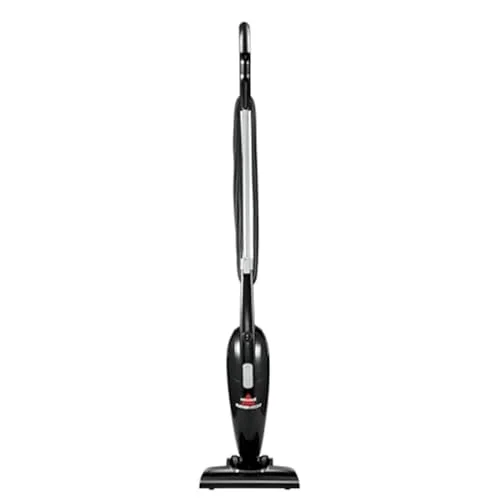
Buy the Bissell Featherweight 2033M as an exceptionally light secondary cleaner for small dry messes on hard floors, but walk away if it must deep-clean carpet, contain fine dust, or cover a home without frequent outlet changes.
Based on published owner reports, 1 owner discussion and 2 other sources.
We earn a commission if you buy through our links, which does not affect what we say.
Read how this site works →
The final call
The Bissell Featherweight 2033M is easy to recommend as a secondary electric broom for a mostly hard-floor home, especially when three-pound handling is the difference between cleaning now and postponing it. It collects the small daily messes that justify keeping it close, and the absence of a battery or brush roll removes two familiar sources of inconvenience.
It is just as easy to reject as an only vacuum. The short reach, fixed head, small debris path, dusty filter arrangement and lack of carpet agitation impose a low cleaning ceiling. Buy it to replace a broom, not to replace a competent upright, canister or powered-head stick vacuum.
Buy the Bissell Featherweight 2033M as an exceptionally light secondary cleaner for small dry messes on hard floors, but walk away if it must deep-clean carpet, contain fine dust, or cover a home without frequent outlet changes.
Best for: Pet hair
The Bissell Featherweight 2033M succeeds once you stop asking it to be a small upright vacuum. It is closer to an electric broom with a detachable hand vac: wonderfully light, mechanically simple and quick to grab when crumbs, loose hair or cat litter appear on a hard floor. That narrow purpose is not an insult. A modest cleaner that gets used can be more valuable than a capable one that stays in the closet.
Its limitations are just as clear. The floorhead has no powered brush roll, the roughly 15-foot cord constrains its reach, the central fabric filter needs regular attention, and the machine does not offer HEPA filtration. Carpet agitation, embedded pet-hair removal and fine-particle containment are not merely weaker than on a full-size vacuum; they are absent or demonstrably poor. Independent measurements also describe low overall airflow and suction, despite the head producing effective pickup where its small intake seals tightly against a floor.
Buy it if
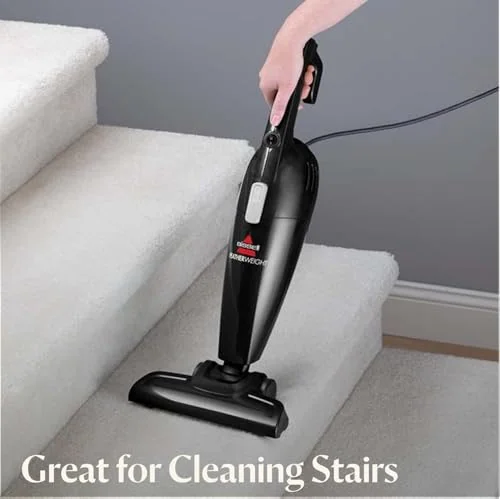
Your cleaning is mostly dry surface debris on sealed hard flooring, low-pile rugs are secondary, and lifting or pushing a conventional vacuum is the bigger obstacle. It is also a persuasive utility cleaner for stairs, kitchen crumbs and loose litter around a box, provided an outlet is close.
Skip it if
This will be your only vacuum in a carpeted home, you need serious pet-hair removal, or asthma and dust sensitivity make fine-particle retention important. Large rooms, plush rugs and debris much bigger than litter also expose the design quickly.
The exact model number matters. The 2033M reviewed here is the basic black corded Featherweight with a straight-suction floorhead and crevice tool. It is not a cordless Featherweight, and it is not one of the Turbo or PowerBrush versions that adds a rotating brush. Advice about batteries, charging, belts or brush-roll removal therefore belongs to a different machine.
Key Specifications
Three configurations, one very simple machine
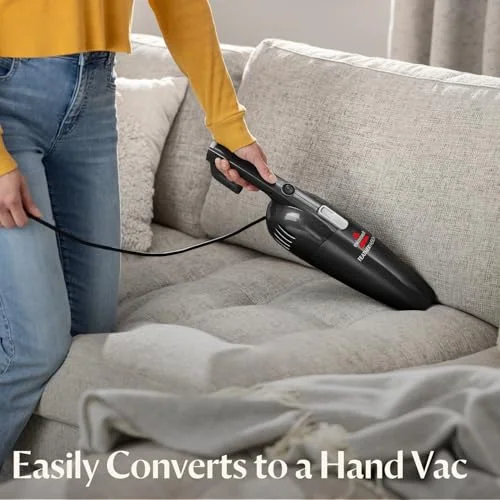
In its normal form, the long handle, vacuum body and floor nozzle make a conventional stick. Remove the handle and floorhead to use the motor body as a hand vacuum, or connect the floorhead directly to the body for stairs. The included crevice tool fits the body for edges, gaps and baseboards. “Three in one” describes three arrangements of the same cleaning ends rather than three specialized tools, but the conversion is genuinely straightforward.
Handheld mode is useful for loose crumbs, cobwebs and stair treads. It is less persuasive for a car because the short mains lead may demand an extension cord, automotive carpet benefits from agitation, and the package lacks a dusting brush or upholstery tool. The removable floorhead makes stairs easier than carrying a full upright, but carpeted treads remain subject to the same cleaning limitation as any other carpet.
Extraordinary lightness does not create swivel steering
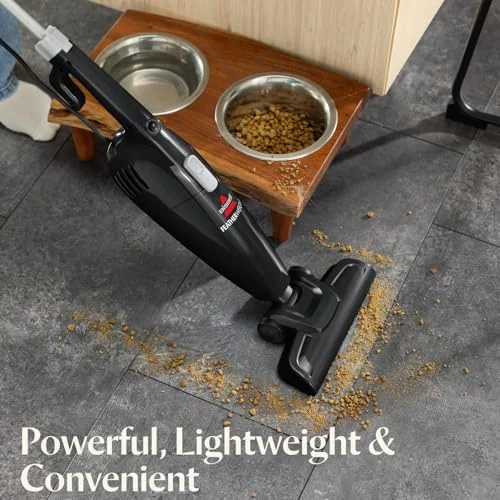
At roughly three pounds in independent measurements, this is exceptionally easy to lift, carry and push. The weight advantage is substantial for stairs, quick kitchen cleanup, older users and anyone whose strength or energy makes a conventional upright unrealistic. Its narrow footprint also slips into modest storage spaces without a dock or charger.
Steering is more primitive than the low weight first implies. The floorhead does not swivel, so direction changes come from moving your arm, altering the handle angle or sliding the head sideways. The dirt cup can meet very low furniture before the nozzle reaches far underneath, and the handle neither folds nor shortens for storage. It occupies little floor area, but it remains a tall appliance.
Unlimited runtime, 15-foot freedom
A cord removes charging pauses, battery degradation and a countdown clock. It does not remove range anxiety; it merely changes the cause. The lead is about 15 feet, roughly half the reach associated with many full-size vacuums, and owners commonly report changing outlets or adding an extension lead to cross a room. A very small apartment may tolerate that easily, but “corded” should not be confused with “whole-home reach.”
If the cord-versus-battery trade is still undecided, our guide to corded and cordless stick vacuums separates operating time from practical freedom.
Strengths & Limitations
Strengths
- Its roughly three-pound weight makes carrying, stairs and quick cleanup unusually easy.
- The sealed straight-suction head picks up small dry debris and loose hair effectively on hard floors.
- No brush roll means no hair wrap, drive belt or roller cleaning.
- Corded operation avoids charging delays, runtime limits and battery replacement.
- The body converts simply for stairs, gaps and handheld pickup.
- The narrow footprint stores easily in a small apartment or utility closet.
Limitations
- It cannot agitate carpet, so embedded grit and pet hair are poorly addressed.
- The basic non-HEPA filter offers weak fine-particle containment.
- The roughly 15-foot cord forces frequent outlet changes in larger spaces.
- The narrow intake can block, push or later drop chunky debris.
- The exposed central filter loads quickly and makes emptying dusty.
- The fixed head, small cup and limited attachment set constrain whole-home use.
The tiny intake is both the trick and the trap
On sealed hard floors, the 2033M can look far more capable than its 2-amp motor suggests. Its floorhead places a small suction opening and squeegee close to the surface, creating a tight seal over a narrow area. Controlled testing found strong pickup of fine and medium debris, sand, loose cat litter and hair, along with nearly perfect crevice pickup. With no spinning roller, long hair has nothing to wind around and dry debris is not flung across the room.
That same geometry explains why broad labels such as “powerful” or “weak” are unhelpful. The motor moves relatively little air, but the sealed opening can concentrate what it has. It can pull dirt from a crack while still struggling to cover a broad strip, clean an edge or move a chunky piece through the head. Cord Edge’s verdict is task-specific: convincing on small debris directly beneath the intake, unconvincing as a general-purpose floor cleaner.
Pieces too large for the front gate may be pushed ahead, lodge inside the nozzle or fall out when the head is lifted. You can sometimes tip the head over the debris or detach it and use the vacuum body directly, but cereal-sized messes should not require choreography. In a comparison of three inexpensive straight-suction sticks, the Bissell repeatedly clogged during a large handheld mess, while the Eureka Blaze’s wider capture opening handled large debris more readily.
| Cleaning job | Expected result | Why |
|---|---|---|
| Dust, crumbs and litter on hard floors | Good fit | The close-sealing head concentrates suction on small surface debris. |
| Long hair on hard floors | Good fit | Straight suction collects loose hair without a roller that can wrap. |
| Loose debris on low-pile rugs | Limited but useful | It can collect visible surface material without grooming the pile. |
| Embedded grit or pet hair in carpet | Poor fit | No brush roll means no agitation to loosen material from the fibers. |
| Cereal and chunky debris | Frustrating | The narrow intake can block, snowplow or retain larger pieces. |
| Fine construction dust or bulk powder | Avoid | The exposed filter loads quickly and is not designed for hazardous fine dust. |
Carpet is where surface pickup becomes a misleading compliment
The Featherweight can remove crumbs, lint and other loose material from suitable low-pile carpet or a flat rug. One controlled test even produced a respectable embedded-sand result for such a small straight-suction machine. That does not make it a carpet vacuum. A visible pass can look clean while fine grit, dust and hair remain below the surface.
RTINGS found little agitation, narrow central pickup, weak edge cleaning and extremely poor pet-hair removal on low-pile carpet. Hair was pushed into the fibers rather than extracted. Owners are divided because their floors and expectations differ: some praise the results on shallow apartment carpet, while others reserve it for hard surfaces and occasional bathroom rugs. Both reactions can be sincere, but the hardware settles the buying question. If carpet matters, choose a machine with a powered floorhead.
Readers weighing that distinction can see our explanation of when a brush roll matters more than straight suction, while shoppers with substantial carpet should start with the stick vacuums selected specifically for carpet.
Pet friendliness depends on where the hair lands
Loose fur on tile, vinyl or wood is a favorable job because there is no roller to tangle. Litter scattered around a box on hard flooring is another credible use, and owners repeatedly value the ability to handle it without charging a battery. Once fur is pressed into carpet or upholstery, the verdict reverses. The crevice tool can work along furniture seams, but it is a narrow rigid nozzle rather than an upholstery brush, so covering a cushion becomes slow and incomplete.
A pet household with mostly carpet should look instead at the site’s stick-vacuum choices for pet hair. The Featherweight is a litter-zone helper, not a complete pet-cleaning system.
Value depends on whether it replaces a broom or a vacuum
As a powered alternative to sweeping, the 2033M makes a strong argument. It picks up dust, hair, crumbs and litter rather than moving them into a pile, changes quickly into a hand vac and demands little storage. The unusually low weight can also increase cleaning frequency, which is a real advantage when a heavier machine is physically difficult or simply too cumbersome for a two-minute mess.
As a replacement for a primary vacuum, it is false economy. Buying a second machine later for carpet, upholstery or allergy filtration erases the appeal of having chosen the cheapest and smallest tool first. “Mostly hard floors” is a more important qualification than “small apartment”; a tiny carpeted apartment still needs agitation, and a dusty studio can still need better filtration.
The closest honest rival on this site is the Eureka Blaze NES215A. Comparative testing favored the Eureka overall because its swivel head, larger debris opening, clearer cup and slightly longer reach improve everyday handling, while the Bissell remains lighter and seals particularly well over crevices. Read the full Bissell Featherweight versus Eureka Blaze comparison if those two inexpensive electric brooms are the shortlist.
Shoppers who need a genuinely capable primary cleaner should use the best corded stick vacuums, while anyone prioritizing low acquisition cost can compare the broader compromises in the budget stick-vacuum guide.
The washable filter saves money by creating work
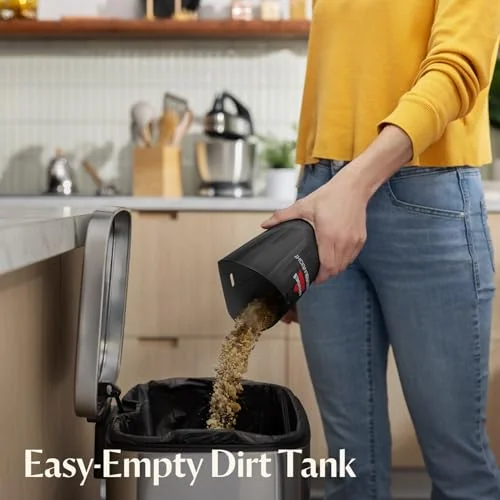
Maintenance access is simple. The dirt cup detaches, the fabric filter pulls out, and the small pre-motor mesh can be checked for visible buildup. The problem is placement: incoming dirt strikes the central filter directly rather than first passing through effective cyclonic separation. Dust coats the filter quickly, airflow falls as it loads, and emptying means handling the dirtiest component.
RTINGS recommends cleaning the dirt-cup filter after every use, washing the cup as necessary and attending to the pre-motor mesh when debris appears. Any rinsed component must dry completely before it returns to the machine. A long-term owner who had removed clumps but not properly washed the filter for a year associated the neglected filter with declining suction. The lesson is not that the motor inevitably fades; it is that this design makes filter care part of normal use.
A practical maintenance routine
- Unplug the vacuum before separating the cup, nozzle or handle.
- Empty the cup before debris packs tightly around the filter.
- Remove loose material from the filter after use rather than waiting for suction to decline.
- Wash the filter and cup when needed, following the manual’s care directions.
- Allow every washed part to dry completely before reassembly.
- Clear visible debris from the floorhead opening because there is no roller to remove.
BISSELL advertises a 0.67-liter cup, while RTINGS measured 0.45 liter. Either figure describes a small container, and the disagreement matters less than the experience: it fills quickly in dusty rooms, the dark plastic is not especially easy to inspect, and removing the filter can release dust or spill debris. The cup is easy to access, not necessarily clean to empty.
No HEPA filter means no allergy recommendation
The 2033M uses basic filtration rather than a sealed HEPA system. Instrumented testing recorded poor fine-particle retention, and vacuum specialists flag the central fabric-filter arrangement as prone to clogging and dust recirculation. That is a categorical reason to reject it for serious allergies, asthma or cleaning where containing fine dust is a priority, regardless of how appealing its weight may be.
Buyers unsure how much filtration they need can use Cord Edge’s guide to HEPA filtration in stick vacuums before choosing a lightweight cleaner.
Simple construction is not the same as proven durability
The lack of battery, charging electronics, brush motor, roller and drive belt removes several components that can wear or demand maintenance. It also leaves an inexpensive all-plastic body, a light handle and a dirt-cup cover that independent inspection found flimsy. The retained owner evidence is useful for immediate usability but thin on years of service, so Cord Edge cannot responsibly call the 2033M durable.
One exact-listing owner reported a burnt-plastic smell and total failure after three days. That is alarming but remains a single anecdote, not a failure-rate study. Treat the Featherweight as a light-duty appliance, avoid yanking it by the cord or forcing the handle, and do not infer industrial longevity from mechanical simplicity.
Frequently Asked Questions
Is the Bissell Featherweight 2033M cordless?
No, the 2033M is a corded model with an approximately 15-foot power lead.
Does the Bissell Featherweight work on carpet?
It can collect loose surface debris from suitable low-pile carpet and rugs, but its brushless head cannot reliably remove embedded dust, grit or pet hair.
Does it pick up pet hair?
It handles loose pet hair well on hard floors without brush wrap, but performs poorly when hair is embedded in carpet or upholstery.
Does the 2033M have a HEPA filter?
No, it uses basic filtration and is a poor choice when strong fine-particle containment is required.
Can the filter be washed?
Yes, the filter can be cleaned and washed, but it must be allowed to dry completely before being reinstalled.
How often should the filter be cleaned?
RTINGS advises cleaning the dirt-cup filter after every use because debris strikes it directly and can restrict airflow quickly.
Which replacement filters fit the 2033M?
RTINGS identifies filter part numbers 1611500 and 1611508 for the basic Featherweight family, so confirm the model label before ordering.
How do you convert it into a handheld vacuum?
Unplug it, release the floorhead and long handle, then use the vacuum body alone or insert the included crevice tool.
How do you remove the brush roller?
You do not remove one because the basic 2033M floorhead has no brush roll, and roller instructions apply to other Featherweight variants.
What attachments come with the 2033M?
The exact package includes a removable floor nozzle and one rigid crevice tool, with no upholstery brush, dusting brush or powered pet tool.
Can it replace a broom?
It can replace dry sweeping for dust, crumbs, loose hair and small debris on hard floors, but it cannot pick up liquids or reliably swallow chunky pieces.
Can it be the only vacuum in a small apartment?
It can serve a very small mostly hard-floor space if its owner accepts frequent filter care and outlet changes, but meaningful carpet or allergy needs call for a more complete vacuum.
Can it clean a car?
Its hand-vac body and crevice tool can collect loose crumbs from accessible gaps, but the short cord, weak carpet cleaning and lack of upholstery tools limit serious car cleaning.
Is the Bissell Featherweight loud?
RTINGS measured roughly 72 to 73.6 dBA and considered it relatively quiet for a vacuum, though it is not silent.
Does it need a replacement belt?
No, the 2033M has no powered brush roll or floorhead drive belt.
Sources (4)
- Amazon listings and customer reviews — Bissell Featherweight 2033m
- Owner reports across r/VacuumCleaners threads
- Owner and reviewer video, 4 channels
- Rtings — Article — www.rtings.com