Dyson V8 beats the Eureka NEC280TL where ownership gets difficult
Choose the Dyson V8 unless you mainly clean hard floors, prize button operation and low weight above durability, and can accept the Eureka NEC280TL as an inexpensive convenience vacuum rather than a long-term investment.
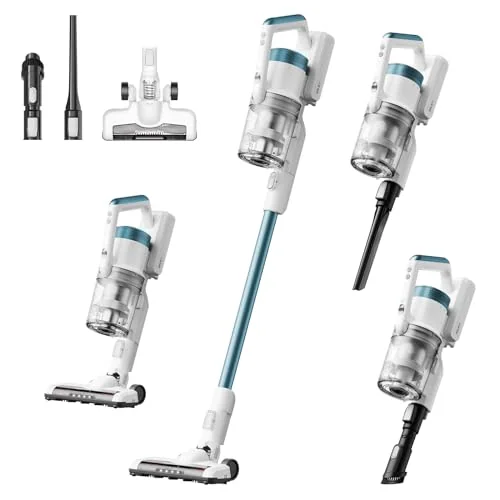
Eureka NEC280TL
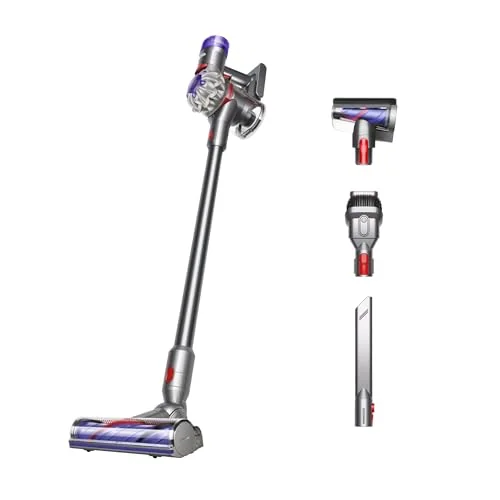
Dyson V8 cordless vacuum
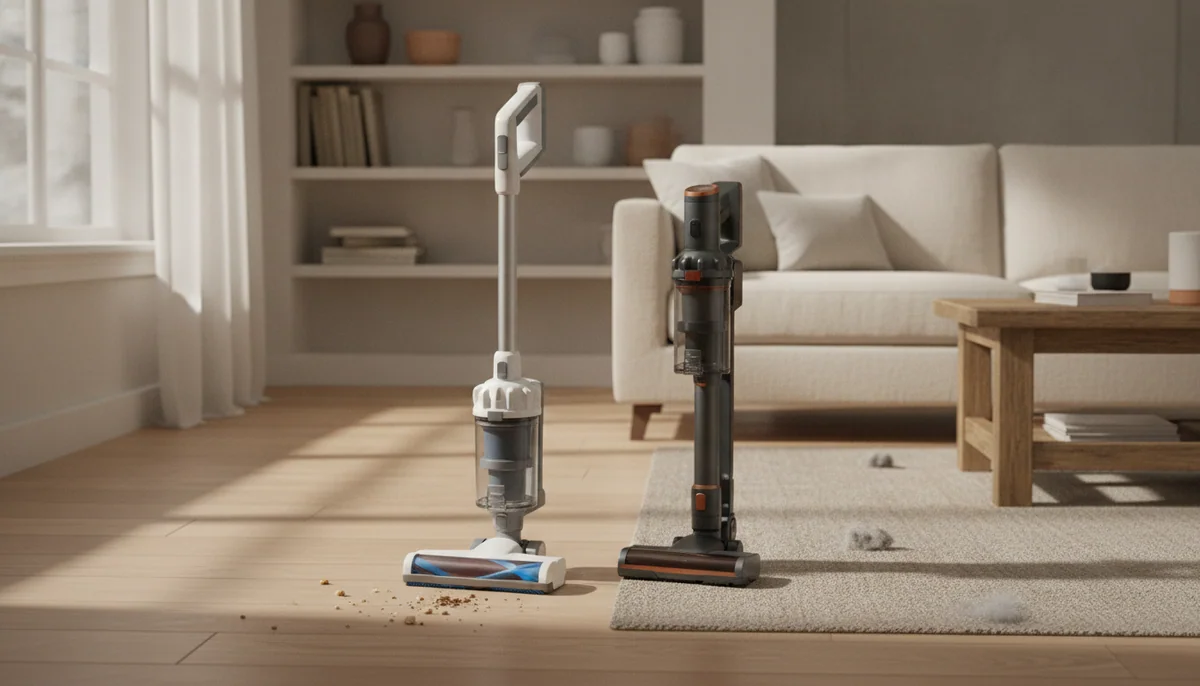
This comparison is closer on the floor than it is in the ownership ledger. The Eureka RapidClean Pro NEC280TL recovered an average of 96% of coffee grounds and 94% of sugar across hardwood and two carpet types in independent testing. In a direct visible-debris demonstration, it stayed surprisingly close to the Dyson V8 on dog hair, coffee and rice. The Eureka is not pretending to clean; it can make an ordinary dirty floor look clean.
Cord Edge still gives the V8 the win. The Dyson has the more substantial floor head, better edge precision, stronger pet tools and a much broader ecosystem of batteries, filters, bins, wands and cleaner heads. Those advantages matter after the novelty of a cordless vacuum has worn off and the first clogged airway, tired battery or damaged part has to be dealt with.
The Eureka’s objection is harder to excuse. Retained owners repeatedly describe small springs, plastic latches, wand connections, dirt-cup seals and locking points failing. One upper unit detached during use and struck the floor; another carefully maintained machine accumulated several connector and seal failures within ten months. Eleven accounts cannot produce a reliable defect rate, but similar failures at the same joints make construction the NEC280TL’s defining risk.
The Dyson does not win by becoming trouble-free. Its small bin fills quickly, its trigger must be held continuously, and Max mode turns the battery from a cleaning plan into a short burst. Charging takes hours, and the screw-fastened battery cannot be exchanged mid-session like a modern click-in pack. The choice is therefore not sturdy perfection against disposable junk; it is a mature, repairable but dated platform against a lighter budget machine with more troubling structural evidence.
At a Glance
| Feature | Eureka RapidClean Pro NEC280TL Cordless Stick Vacuum Cleaner – Lightweight 5.3 lbs, 40-Min Runtime, LED Headlights, 3 Power Modes, Ideal for Pet Hair, Hard Floors & Carpets | Editor's Pick Dyson V8 Cordless Vacuum, Cleans Hard Floors and Carpets, Detangles, Converts to Handheld, 115AW, 2 Power Modes, Up to 40 Minutes¹ |
|---|---|---|
| Price tier | Mid-range | Premium |
| Format | NEC280TL | Large |
| Finish | Blue | Silver / Nickel |
| Check Price on Amazon | Check Price on Amazon |
The Eureka wins the first five minutes, while the Dyson wins the harder jobs
On hard floors covered with crumbs, litter, dust and loose hair, the NEC280TL makes an excellent first impression. Its 5.3-pound listed weight, normal power button, swivel head and front LEDs create less friction than the V8’s hold-to-run trigger and unlit Motorbar. The lights are particularly useful under furniture and along dim edges, where they expose pale debris that would otherwise survive until tomorrow.
The V8 answers with a better working end. Its Motorbar is designed to clean hard floors and carpets while combing hair from the brush, and the package adds a conical Hair screw tool for upholstery and pet beds. Owners of the exact listing repeatedly support its mixed-floor pickup, handheld usefulness and ability to pull stubborn fur from carpeted vehicle trim and soft furnishings.
Neither floor head loves every large hard-floor mess. The Eureka can require a head lift to admit cereal-sized pieces, while the V8 Motorbar’s low front edge can push larger debris rather than swallow it. Fine particles are easier for both. If bare-floor cleaning is the entire brief, the Eureka’s headlights and easier controls may matter more than the Dyson’s stronger carpet and accessory case; readers with a demanding hard-floor home should also compare the wider field of cordless vacuums designed for hard floors.
| Decision point | Eureka NEC280TL | Dyson V8 | Advantage |
|---|---|---|---|
| Daily hard-floor debris | Strong measured fine-debris pickup with useful headlights | Good routine pickup, but the Motorbar can push larger pieces | Eureka, narrowly |
| Carpet | Useful on low pile and surface debris, with limited deep-cleaning evidence | Stronger cleaner-head design and more convincing carpet evidence | Dyson |
| Pet hair | Picks up loose fur, but its small roller still needs clearing | Motorbar plus powered Hair screw tool covers floors and upholstery | Dyson |
| Control | Push-button operation with three power modes | Hold-to-run trigger with two power modes | Eureka |
| Maximum advertised runtime | Up to 40 minutes in Eco and 15 minutes in Max | Up to 40 minutes under favorable low-power conditions | Tie on the headline, not necessarily in use |
| Battery swapping | Integrated for normal use | Replaceable with tools, but not click-in | Dyson for repairability |
| Storage | Wall mount or supported leaning position | Wall dock or safe horizontal storage | Neither |
| Parts path | Fragmented, with some model-specific components difficult or uneconomical to replace | Broad genuine, used and third-party parts market | Dyson |
| Main ownership risk | Recurring latch, spring, seal and cup-connection failures | Battery aging, trigger discomfort, clogs and the cost or quality of replacement parts | Dyson |
Pet hair separates them more clearly than ordinary crumbs
The Eureka can collect loose cat and dog hair from hard floors, rugs and furniture, but “tangle-free” should not be read as maintenance-free. A professional-use account found that the small roller needed clearing again soon after it had been cleaned. The NEC280TL is pet-hair capable in a home with routine shedding; it is not the stronger package for dense fur in carpet, pet beds and a vehicle.
The V8’s two powered hair tools make its recommendation more coherent. The full-width Motorbar handles the floor, while the Hair screw tool gives the handheld configuration a specific job on upholstery and carpeted trim. Hair can still collect at roller ends, the narrow airway can still clog, and a shedding household will still empty the modest bin frequently, but the tool set is designed around the problem rather than merely claiming that the main brush resists it.
Homes with several heavy-shedding animals should not assume either small-bin cordless vacuum settles the category; the guide to cordless pet-hair vacuums covers machines built for that more demanding workload.
Forty minutes means almost nothing without the mode
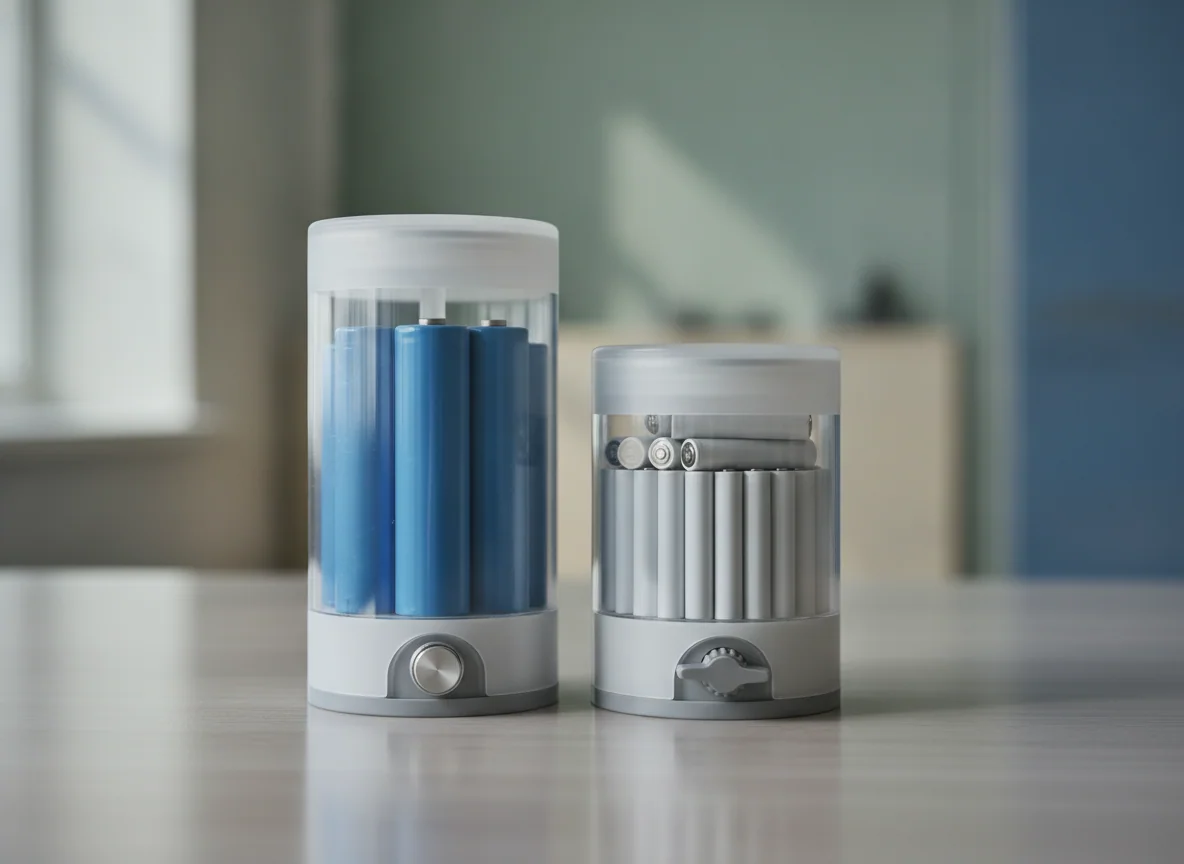
Eureka states up to 40 minutes in Eco and 15 minutes in Max. Real-use accounts commonly land around 20 to 30 minutes depending on power selection and floor mix. That is enough for an apartment, a deliberate route through a few rooms or daily spot cleaning, but the integrated battery prevents a quick handoff to a charged spare.
Dyson also advertises up to 40 minutes, with the explicit qualification that runtime changes with mode, dust level, floor type and attachment. Controlled V8 testing puts Max-mode operation with a powered head at roughly single-digit minutes, while retained owners describe around 30 minutes on regular power and much less on high. Max is for a stubborn patch, not a carpeted floor plan.
Both machines punish anyone who plans around the largest number on the box. The V8 remains the more credible carpet cleaner, but needing high power across several rooms exposes its oldest limitation. The Eureka offers a third mode and easier button operation, yet its longer settings do not transform it into a deep-carpet machine. Cord Edge’s explanation of how cordless runtime changes under real cleaning loads is worth reading before treating either ceiling as a whole-home promise.
The trigger is a genuine reason to reject the Dyson
V8 users must keep the trigger depressed throughout cleaning. The design stops the motor immediately while furniture is moved or a tool is changed, which conserves some charge, but that efficiency is purchased with constant finger pressure. Anyone with arthritis, reduced grip strength or wrist pain should try this control style before buying rather than assuming the V8’s relatively low total weight guarantees comfort.
The Eureka uses a conventional power button and is slightly lighter by the available figures. Its motor and cup still sit near the hand, so above-floor work can feel top-heavy, but it does not demand a continuous squeeze. For an otherwise suitable buyer with hand pain, that single ergonomic difference can outweigh the Dyson’s better head and parts ecosystem.
Two products, two honest job descriptions
The Eureka NEC280TL is the light hard-floor helper for buyers willing to gamble on its connectors.
Choose it for crumbs, litter, dust and loose hair in a small mostly hard-floor home when low weight, headlights and button operation matter most.
Recurring reports of failed latches, loose springs and dirt-cup connection problems make it difficult to recommend as the only vacuum or a long-term keeper.
The Dyson V8 is the better all-rounder for carpet, pets, stairs and repairable ownership.
Choose it when stronger floor-head design, powered pet tools and a broad replacement-parts market justify accepting an older battery platform.
Its Max-mode runtime is brief, recharging is slow, the bin is small and the trigger can become painful during extended use.
The ownership gap matters more than the suction argument
A short debris test naturally favors the Eureka’s value story because both vacuums can collect a staged surface mess. It cannot tell us how well each head extracts embedded dirt over years, how a battery ages, whether a cup keeps sealing or whether the wand remains attached after hundreds of cleaning sessions. The direct comparison is useful precisely because it proves the Eureka can clean; it does not erase the limitations that appear outside the demonstration.
The NEC280TL’s parts situation weakens an otherwise persuasive budget proposition. Replacement batteries and some model-specific components exist, but availability is scattered and compatibility can be unclear. A replacement floor head can also cost enough to make repairing a budget vacuum unattractive. More troublingly, an owner with a failed wand connection could not find the piece needed to restore it.
The V8’s age works in its favor here. Batteries, filters, bins, wands and heads are widely sold because the platform has been popular for years. That does not make every repair cheap or every third-party battery wise, but it gives an owner more options than a catalogue trail that ends at an ambiguous marketplace listing.
Dyson’s longer record also contains battery degradation, broken plastic, failed heads, clogs and machines that became uneconomical to repair. The proper conclusion is not that the V8 lasts forever. It is that its likely wear points are better understood and its modular parts are easier to pursue, while the Eureka’s repeated latch and seal failures can disable a relatively new machine before routine battery aging becomes the main concern.
Buyers tempted by more power and longer sessions can see how the older platform compares with its successor in the Dyson V8 versus V11 comparison, while readers who want the complete case for this specific package can continue to the full Dyson V8 review.
Who should buy which vacuum
Choose the Eureka for a small hard-floor home
The NEC280TL makes the most sense in an apartment or compact house where daily work means crumbs, litter, dust, loose pet hair, stairs and occasional car cleaning. Its lights, ordinary power button and low carrying weight improve every brief session. Check the warranty terms, keep the purchase record and treat the machine gently around the wand and cup connections.
Choose the Dyson for carpet and upholstered pet hair
The V8’s Motorbar, Hair screw tool and more substantial head make it the stronger choice for rugs, low-pile carpet, stairs, sofas, pet beds and carpeted vehicle interiors. It suits short, frequent sessions better than uninterrupted deep cleaning. Use regular power for the route and reserve Max for the patches that actually need it.
Choose the Eureka if holding a trigger is a deal-breaker
Accessibility can overturn the general ranking. A vacuum that strains the hand will remain in the closet, regardless of its pet tool or parts market. The Eureka’s push-button control is the cleaner answer for buyers who cannot comfortably maintain pressure on the V8 trigger, provided its structural risk is acceptable.
Choose neither for a large carpet-heavy house
Both batteries become restrictive when a whole home needs sustained high power, and neither small bin welcomes a major shedding event. A large carpeted household should start with the broader cordless carpet shortlist or reconsider whether a corded machine is the better primary cleaner through Cord Edge’s guide to replacing an upright with a stick vacuum.
Buy the Dyson V8 when these are the only two choices. It asks for compromises every day, especially at the trigger and charger, but it handles more cleaning jobs and gives an owner a clearer route through wear, maintenance and repair. Buy the Eureka only for its narrower role: a light, convenient hard-floor cleaner whose impressive pickup is worth the construction gamble.
Frequently Asked Questions
Is the Eureka NEC280TL as powerful as the Dyson V8?
The Eureka can stay close on visible everyday debris, but the evidence does not support equal airflow, floor-head quality, deep-carpet cleaning or long-term construction.
Which vacuum is better for pet hair?
The Dyson V8 is better equipped for pet hair because it combines a detangling full-size Motorbar with a powered Hair screw tool for upholstery and pet beds.
Which one is better for hardwood floors?
The Eureka has the convenience advantage on routine hard-floor debris through its headlights, button control and low weight, although both heads can struggle with cereal-sized pieces.
Do either of these vacuums run for a full 40 minutes at maximum power?
No, Eureka states 15 minutes in Max and controlled Dyson V8 results with a powered head fall to roughly single-digit minutes on Max.
Can the batteries be replaced?
Both batteries can be replaced through repair work, but neither vacuum provides a convenient click-in pack for swapping during a cleaning session.
Why might a Dyson V8 pulse or shut off repeatedly?
Pulsing commonly points to restricted airflow from a full bin, dirty filter or blockage, while persistent abrupt cutoffs can also involve the battery, charger, trigger, motor or electronics.
What should I check when a Dyson V8 no longer holds a charge?
Check the outlet and charger, complete a full charge, clear the airway and clean and dry the filters before deciding that the screw-fastened battery needs replacement.
How do I empty the Dyson V8?
Hold the vacuum over a bin and pull the red top release upward so the cyclone rises and the bottom door opens, then close it after the debris has cleared.
Do the Eureka NEC280TL’s anti-tangle features eliminate brush maintenance?
No, retained use evidence shows that hair can still accumulate around its small roller and must be removed manually.
Can either vacuum stand upright without support?
No, the Eureka’s Easy Rest feature is for supported leaning and the Dyson requires its dock or a safe horizontal resting place.
Which model is easier to repair over the long term?
The Dyson V8 has the stronger repair case because batteries, filters, bins, wands and cleaner heads are more widely available for its mature platform.
Ready to Choose?
Sources (3)
- Amazon listings and customer reviews — Eureka Nec280tl and Dyson V8 Cordless Vacuum
- Owner and reviewer video, 2 channels
- Vacuumwars — Article — vacuumwars.com