The Shark IP3251 makes self-emptying worthwhile, but it does not make vacuum maintenance disappear.
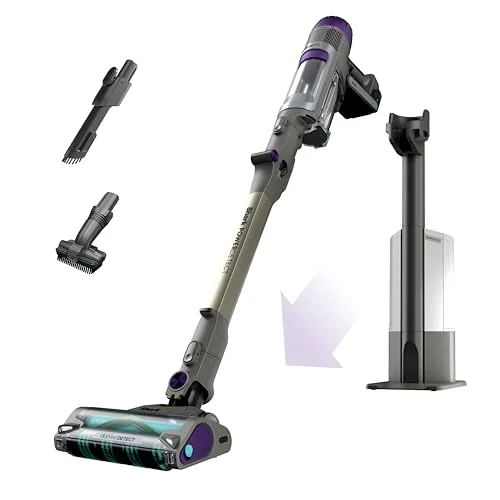
The Shark PowerDetect Clean & Empty IP3251 is a strong buy for mixed-floor homes that value automatic emptying and will tolerate its considerable weight, frequent filter care and limited repairability.
Based on published owner reports, 2 owner discussions and 3 other sources.
We earn a commission if you buy through our links, which does not affect what we say.
Read how this site works →
The final call
Buy the Shark PowerDetect Clean & Empty IP3251 if an always-charged, automatically emptied floor vacuum will make you clean more often and your home combines hard flooring with ordinary rugs or carpet. Its pickup, filtration, under-furniture reach and dock convenience are strong enough to justify the machine’s complexity.
Do not buy it merely because “70 minutes,” “anti-tangle” or “Clean & Empty” sounds like freedom from cordless compromises. Real powered runtime is much shorter, hair still finds places to lodge, and the filters, sensors and rollers still demand hands-on care. For the right household this is a capable daily workhorse; for someone seeking a light, simple and readily repairable vacuum, it is an elaborate answer to the wrong question.
Readers still deciding what compromises suit their floors can compare the broader field in Cord Edge’s guide to the best cordless stick vacuums, while anyone concerned that a stick cannot cover deep carpet and long-term whole-home duty should start with whether a stick vacuum can replace a full-size upright.
The Shark PowerDetect Clean & Empty IP3251 is a strong buy for mixed-floor homes that value automatic emptying and will tolerate its considerable weight, frequent filter care and limited repairability.
Cord Edge’s verdict: this is one of the more convincing attempts to turn a cordless stick vacuum into the machine you reach for every day. Its twin-roller head collects fine dust, pet hair and bulky crumbs without demanding a head change between hard floor and carpet; the folding wand reaches beneath furniture; and the dock deals with the small onboard bin while restoring the charge. Those are practical improvements, not an assortment of glowing buttons in search of a problem.
The catch is that convenience ends at the dock. The IP3251 is heavy for a cordless, takes hours to recharge, has a primary brushroll that is not readily removable, and surrounds its bagless system with filters and sensors that still need attention. Dense pet hair can lodge in the front roller, cup or evacuation path even when the main brushroll stays clear. Some lightweight, plush or delicate rugs are a poor match because there is no brushroll-off control or height adjustment.
Buy it if the dock will change your routine
The ideal home has hard floors plus conventional low- or medium-pile carpet, regular crumbs or pet hair, furniture worth cleaning beneath, and somebody who hates emptying a dusty little cup after every session. The dock’s value is not abstract capacity; it is returning the vacuum to a charged, empty state so a five-minute clean remains a five-minute clean.
Walk away if cordless must mean effortless
Choose something else if wrist or shoulder strain is a concern, if your rugs need suction-only cleaning, or if you expect “Clean & Empty” to mean no filters, no clogs and no contact with hair. Buyers who value simple repairs, interchangeable tools and an easily replaceable main roller should also treat the IP3251’s serviceability as a serious objection rather than a footnote.
Shark advertises automatic emptying, four detection systems, two brushrolls, a bending wand, odor treatment and up to 70 minutes of runtime. The runtime footnote matters: that maximum is measured in Eco mode at the hand vacuum, not while driving the powered floorhead through a mixed home. The exact IP3251 package includes the charging and evacuation base, an eight-inch duster-crevice tool, a Pet Multi-Tool and the scented puck.
Key Specifications
The dock earns its floor space
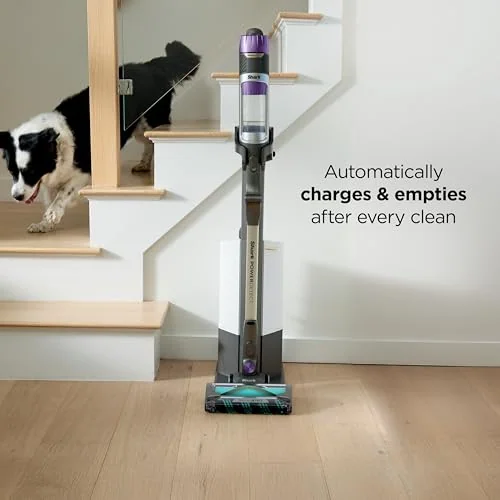
Seat the vacuum and the base charges it while evacuating the onboard cup in a short, loud cycle. The transfer removes the most annoying piece of normal cordless ownership: carrying a tiny bin to the trash after each use, opening it near your face and persuading clinging dust to leave. Excellent measured filtration in both the vacuum and dock makes the system especially attractive to people who want dust contained between emptying sessions.
The bagless design avoids replacement bags, but the larger base bin eventually opens over a trash can like any other loose-dirt container. Shark’s “up to 45 days” claim is a capacity scenario, not a schedule. A quiet household may approach it; frequent cleaning, several pets or one memorable cereal spill may fill the bin much sooner. Check the indicator and the actual debris load rather than treating the calendar as a contract.
Quiet mode is also easy to misread. It does not perform a whisper-soft evacuation. It postpones automatic emptying while charging continues, which is useful when a child is asleep or the dock sits near a living space. Restore evacuation later or the onboard cup will remain full.
The scent puck freshens the dock, not the floor
The odor system is best understood as scented air around the evacuation base. Air passes the consumable puck during the dock cycle, creating a light fresh smell near the station. It does not deodorize every carpet fiber or neutralize dirty pet hair while the handheld is moving through the room. Scent-sensitive buyers should set the control to its minimum and decide whether this consumable has any value at all.
MultiFLEX is the best feature away from the dock
Release the wand joint and the upper body folds while the nozzle continues beneath a bed or sofa. This is more than compact storage dressed up as ergonomics; it permits meaningful under-furniture reach without asking the user to crouch behind an eight-pound stick. Steering remains responsive while the head is planted on the floor.
The joint has an irritating second life as a storage lock. Multiple users and reviewers have accidentally driven the head into its locked angle during an angled pass, stopping the machine and forcing a reset with a foot on the nozzle. The vacuum also is not a reliably free-standing stick during ordinary pauses. Dock it, fold it into a stable storage posture or lay it down rather than trusting it against a wall.
It is heavy in exactly the places that matter
Independent measurements put the complete core vacuum at about 8.16 pounds, with roughly 4.5 pounds in hand. That does not sound extraordinary beside an upright, but a stick vacuum concentrates its motor, battery and cup around the wrist while a large twin-roller head remains at the opposite end. It steers easily on the floor yet feels much less graceful when carried, used on upholstery or raised toward vents.
This distinction resolves the conflicting owner descriptions. A person cleaning open floors may call it maneuverable or even light because the powered head bears much of the weight. A person with wrist pain, a shoulder limitation or several flights of stairs may experience the same machine as exhausting. If hand weight is a priority, do not let the word “cordless” stand in for an actual ergonomic trial.
The included tools feel secondary
The duster-crevice tool and Pet Multi-Tool cover basic edges, stairs and upholstery, and either can attach to the handheld or wand. Removing the wand and joining the main floorhead directly to the motor creates a useful compact arrangement for carpeted stairs. Even so, the handheld body is bulky, the accessory selection is small, and there is no included motorized mini brush.
This is primarily an excellent floor vacuum with occasional above-floor ability, not a complete toolkit for blinds, ceiling fans, car interiors, vents and upholstery. Attachments are model-specific enough that buyers should confirm compatibility against IP3251 rather than assuming another Shark tool will click into place.
Strengths & Limitations
Strengths
- The twin-roller head collects fine dust, pet hair and bulky debris very well across hard floors and ordinary low-pile carpet.
- The bagless dock reduces daily dust-cup handling while charging the vacuum for its next use.
- Measured particle filtration is excellent in both the core vacuum and the dock system.
- MultiFLEX provides genuinely useful reach beneath beds and sofas without requiring a deep crouch.
- Detect mode automates surface and debris response while preserving more battery than continuous Boost.
- The removable battery offers a better long-term ownership path than a permanently sealed pack.
Limitations
- The complete vacuum is heavy, and its bulky handheld configuration can fatigue wrists, arms and shoulders.
- Boost lasts only about 12 to 14 minutes with the powered head in independent tests.
- The dock adds filters, noise and floor-space demands rather than eliminating maintenance.
- The main brushroll is not readily removable, which makes hair clearing and eventual repairs unnecessarily difficult.
- There is no height adjustment or brushroll-off setting for lightweight, plush or delicate rugs.
- The included above-floor tools are sparse, proprietary and less convincing than the main floorhead.
- Dense pet hair can still jam the front roller, cup flap or auto-empty pathway.



Great floor pickup, with a strangely weak grip on cracks
The IP3251’s broad achievement is that its floorhead works well across very different debris. TechGearLab recorded 97% pickup on hardwood and 94% on low-pile carpet, while its high-pile result fell to 54%. Its pet-hair results were 84% on low pile and 74% on high pile. That is a persuasive hard-floor and ordinary-carpet showing, but it is not evidence that the machine extracts every fine particle from deep, plush carpet.
RTINGS tested the IP1251, the dockless version of the same core PowerDetect vacuum, and reached a cooler conclusion. It found strong one-pass hard-floor collection but only decent carpet pickup, particularly where fine debris was embedded. Its crack score was 5.5 out of 10, and measured floorhead suction was low because the wide twin-roller nozzle does not form a tight seal. This explains the seeming contradiction between powerful hand-vac suction and merely ordinary performance in grout lines or deep gaps.
| Job | Verdict | What changes the result |
|---|---|---|
| Hard-floor dust and crumbs | Excellent | Dense piles may collect ahead of the soft roller and need a slower second pass. |
| Low-pile carpet | Very good | Fine embedded dirt can require repeated forward-and-back passes. |
| High-pile carpet | Mixed | The head can bog down, and deep sand is a much harder task than visible surface debris. |
| Pet hair | Strong pickup | The main roller resists jams better than the whole nozzle and cup path resist hair. |
| Edges and corners | Approach-dependent | Running parallel to a wall works better than driving the front bumper directly into a corner. |
| Cracks and deep grout | Weak point | The crevice tool is more dependable than expecting DirtDetect to notice debris below the surface. |
PowerDetect helps, but it does not certify a clean floor
In Detect mode, the vacuum changes suction, roller behavior and lighting in response to dirt, floor type, nearby edges and ambient light. The response is real and often useful. It saves the user from constantly switching modes and directs more power toward a dirty patch rather than spending the entire battery at maximum output.
The sensors are assistants, not inspectors. Debris hidden in a crack may never pass the dirt sensor, and a surface can look clean while fine material remains embedded below. Owner experiences also range from seamless surface changes to late, seemingly arbitrary revving. People sensitive to changing motor pitch should know that the machine repeatedly announces its decisions out loud.
Edges improve from the side, not necessarily from the front
EdgeDetect raises power beside a wall, and some tests and owners report excellent side pickup. The front of the head is a different matter. Its bumper and twin-roller geometry prevent a flush head-on approach, so crumbs in a ninety-degree corner can survive while the display acts pleased with itself. Clean parallel to the baseboard, then use the crevice tool for stubborn corners and recessed joins.
DirectionDetect also deserves a measured description. The head can collect on both the push and pull strokes, which reduces repositioning, but reverse pickup is not equal for every debris shape. The head sometimes plows material backward, and the powered forward pull makes the return stroke feel heavier on carpet.
Pet hair is a strength with several escape clauses
The main brushroll’s anti-wrap design works impressively in many long-hair and pet homes, and controlled tests found strong hair pickup without enough accumulation to jam the roller. That is the good news. “Anti-tangle” applies poorly as a description of the entire machine: hair can gather at the front soft roller’s comb, around the small wheels, against the cup screen, at the flap or inside the narrow transfer route to the dock.
The difference matters in a shedding household. One owner may dock the vacuum after every run and empty the base weekly or monthly; another may have to pull a compacted hair ball from the onboard cup after the second clean. The IP3251 is good at removing hair from floors, but nobody should buy it on the assumption that the dock will always remove that hair from the vacuum.
Seventy minutes is the wrong number to shop by
A useful runtime estimate must name the mode, tool and floor. RTINGS exceeded the advertised figure with 78.1 minutes in Eco using an upholstery tool, then measured 13.8 minutes in Boost with the powered DuoClean head. TechGearLab recorded 47 minutes on low and 12 minutes on high. Other mixed-floor observations put Detect mode around 30 to 40 minutes.
| Use | Reasonable expectation | Buyer implication |
|---|---|---|
| Eco with a light, unpowered tool | Roughly 70 minutes can be possible. | This is the favorable condition behind the headline claim. |
| Eco floor cleaning | One controlled test reached 47 minutes. | Floor type, debris and roller load can shorten it. |
| Detect on mixed floors | About 30 to 40 minutes is a sensible planning range. | This is the mode Shark recommends for balancing cleaning and endurance. |
| Boost with powered head | About 12 to 14 minutes in independent tests. | Use it for a stubborn patch, not an entire large home. |
Recharge time is the other half of the battery story. Independent tests ranged from about 4.7 to 6.4 hours, so “I will finish upstairs after lunch” may become “I will finish upstairs tonight.” The removable pack can charge through the dock or separately, but an additional battery only helps if an exact compatible pack is available and its added cost makes sense.
What the dock is worth depends on what it prevents
The IP3251’s value is strongest when the dock prevents a real source of friction: airborne dust during manual emptying, a cup that fills with pet hair every session, forgotten charging, or a wall mount you cannot install. In that home, the dock changes how often the vacuum is used and makes the whole product better.
If you vacuum occasionally, have room to empty the cup outdoors or beside a large bin, and care more about compact storage than automatic evacuation, the base becomes an expensive filter cabinet. The dock cannot be added later to the dockless IP1251, so this choice belongs at purchase rather than after a month of ownership.
Compare the IP3251 with the Dyson V15 Detect on cleaning, handling and ownership costs if raw carpet suction, faster charging, a lighter feel and a broader tool ecosystem matter more than the Shark’s bagless dock, large-debris pickup and bending wand. Neither wins every category, and a single “more powerful” label hides the differences that determine daily satisfaction.
The IP3253 is mostly an accessory decision
The IP3251 and IP3253 share their core vacuum, battery, suction, runtime and auto-empty behavior. The IP3253 changes the color and supplies a longer flexible crevice tool plus a FurFins pet tool; the IP3251 has its shorter duster-crevice tool and simpler Pet Multi-Tool. Buy the less expensive bundle unless those particular furniture and crevice accessories solve a problem you already know you have.
Evidence retained for this review is not strong enough to give equally firm advice about the IP3252 or retailer-specific IP3225. Similar names can hide a different head, sensor set or package, so compare the full model number and included components rather than transferring this IP3251 verdict to every product carrying “PowerDetect.”
The maintenance bill is paid in attention
The dock empties dirt; it does not clean the air path that carried the dirt. The handheld contains two pre-motor foam filters and a post-motor HEPA filter, while the dock adds its own washable filter elements. Shark instructs owners to rinse with water only, allow a full 24 hours of air drying, and reinstall nothing while damp. Sensors in the hand-vac airway and around the floorhead also need wiping with a dry, nonabrasive cloth.
A realistic care routine
- Inspect the front roller, wheel axles, cup flap and nozzle airway after hair-heavy cleaning.
- Empty the dock when its indicator appears, suction changes or an unusually large pickup clearly fills it.
- Check the handheld filters when performance or runtime drops rather than waiting for a fixed replacement date.
- Rinse the specified washable filters with water only and leave them out for at least 24 hours to dry completely.
- Wipe dirt, edge and light sensors when detection remains boosted, behaves strangely or produces an error.
- Keep a fully dry spare filter set only if its exact compatibility with IP3251 has been verified.
Reported cleaning frequency varies enormously. Some owners manage with a monthly rinse, while one detailed pet-home account found the foam filters loaded enough to justify service every other vacuuming. That spread is not merely owner fussiness. Bagless filter load depends on fine dust, hair volume, carpet, cleaning frequency and how effectively the cup separates debris before air reaches the foam.
Shark does not provide a universal two- or three-month replacement rule in the material retained for this review. Seller recommendations should not be promoted into manufacturer policy. Wash the reusable pieces as directed, replace damaged filters or ones whose performance cannot be restored, and use exact identifiers when searching: XPRMFIP1000 is the recorded pre-motor part and XPMHIP1000 the handheld HEPA part.
The primary roller is the repairability warning
The front soft roller comes out for cleaning, but the large primary roller is not designed for easy removal. That is manageable while the anti-wrap system works; it becomes infuriating when hair, thread or wear finally demands access. Owners have also reported a removable front roller failing and difficulty finding a replacement for the larger blue roller.
The battery is removable and user-serviceable, which is a meaningful durability advantage over a sealed pack. Parts support elsewhere is less reassuring. Tools use a proprietary connection, some components appear to be offered only as assemblies, and exact replacements may be difficult to locate. Aftermarket filters and front rollers soften the problem without making this a repair-friendly vacuum.
Confident lifespan claims would be fiction. The model arrived in late 2024, so there is no credible decade-long ownership record. Broader Shark experience splits between carefully maintained machines that continue for years and products that lose performance or become uneconomical after a broken plastic part. That brand history is context, not an IP3251 failure rate, but it is enough to keep serviceability in the buying decision.
Frequently Asked Questions
How long does the Shark IP3251 run during normal floor cleaning?
Plan on roughly 30 to 40 minutes in Detect mode for mixed-floor cleaning, while Boost with the powered head lasts about 12 to 14 minutes in independent tests.
Is the battery replaceable?
Yes, the IP3251 uses a removable and user-serviceable battery, although exact replacement compatibility and cost should be checked before ordering.
Does the auto-empty dock remove every kind of debris?
No, it usually transfers ordinary dust and crumbs but compacted pet hair or obstructing debris can remain in the cup or flap and require manual removal.
Can the filters be washed?
Yes, Shark instructs owners to rinse the specified filters with water only and let them air-dry completely for at least 24 hours before reinstallation.
How often should the filters be replaced?
Shark’s retained guidance does not set one universal replacement interval, so wash them as directed and replace any damaged filter or one whose performance cannot be restored.
Is the IP3251 suitable for pet hair?
It removes pet hair very well from many floors, but heavy shedding can still load the soft roller, wheel axles, cup and auto-empty passage.
Does the main brushroll come out for cleaning?
No, the front soft roller is removable but the larger primary brushroll is not designed for straightforward owner removal.
Will it work on every carpet and rug?
No, it performs well on many conventional carpets but can bog down on plush pile, catch tassels or ingest lightweight rugs because it lacks height adjustment and brushroll shutoff.
Can it stand upright by itself during a cleaning pause?
It is not reliably free-standing in its normal cleaning posture, so it should be docked, folded into storage position or laid down safely.
Are other Shark attachments automatically compatible?
No, Shark accessory connections vary by model, so every tool or replacement part should explicitly list compatibility with IP3251.
What differs between the IP3251 and IP3253?
The core vacuum and dock are effectively the same, while the IP3253 changes the color and substitutes a longer flexible crevice tool and FurFins pet attachment.
Is the odor cartridge essential?
No, it adds a light scent around the dock during evacuation rather than improving suction, filtration or floor-cleaning performance.
How does it compare with the Dyson V15 Detect?
The Shark favors automatic emptying, bulky-debris pickup, one-head surface changes and under-furniture reach, while the Dyson generally favors lighter handling, faster charging, stronger fine-debris extraction and a broader attachment ecosystem.
Sources (5)
- Amazon listings and customer reviews — Shark Ip3251
- Owner reports across r/VacuumCleaners threads
- Owner and reviewer video, 7 channels
- Techgearlab — Article — www.techgearlab.com
- Rtings — Article — www.rtings.com