The Shark IP3251 wins the routine, while the Dyson V15 wins the difficult floor.
Buy the Shark PowerDetect IP3251 for most mixed-floor homes because its auto-empty dock, bending wand and versatile twin-roller head improve the daily routine, but buy the Dyson V15 Detect Plus instead when demanding carpet, illuminated hard-floor cleaning or above-floor pet hair is the harder problem.
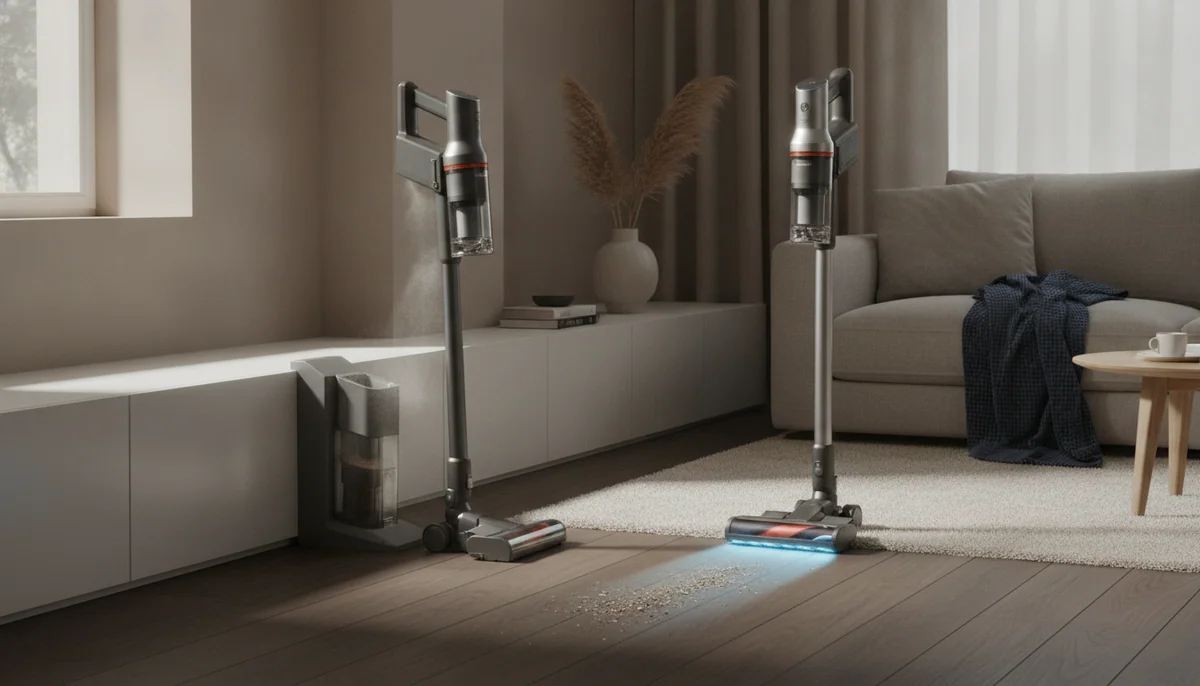
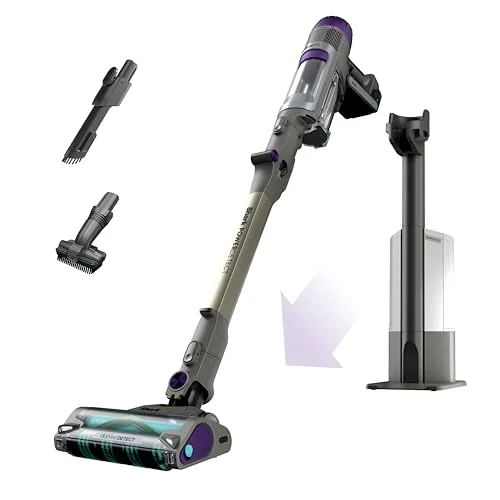
Shark IP3251
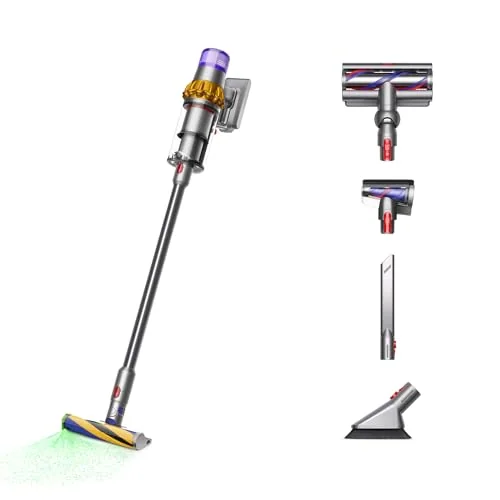
Dyson V15 Detect Plus
Cord Edge’s verdict: the Shark is the better appliance, while the Dyson is the better cleaning instrument. That distinction decides this comparison. The IP3251 returns to its dock, empties its small bin, charges and waits for the next mess; the V15 asks you to empty it manually, hang it securely and keep two floorheads in circulation, but rewards the extra handling with stronger fine-debris extraction and a far more persuasive tool set.
Neither machine is light in the hand, maintenance-free or capable of its headline runtime during ordinary high-power floor cleaning. The Shark places more total weight around a complex floorhead and dock system. The Dyson weighs less overall, yet its motor, battery and bin still sit at the wrist, and its trigger must remain held whenever the machine runs. Buyers hoping that a premium cordless vacuum will float through the house have found two expensive ways to be disappointed.
Choose the Shark for less daily friction
It is the more coherent choice when floors change often, crumbs and pet hair appear every day, furniture demands low-reaching passes and manual bin emptying is the chore most likely to make the vacuum stay parked.
Choose the Dyson for the harder clean
It makes more sense when carpet extraction, visible hard-floor dust, upholstery hair and attachment quality matter enough to justify swapping heads, squeezing a trigger and emptying a dusty bin yourself.
A direct specialist comparison reached the same broad division: Shark makes surface changes and bulky-debris pickup easier, while Dyson offers lighter handling, stronger fine-debris cleaning and a broader attachment ecosystem. The winner is therefore not the machine with the longest list of technologies. It is the one whose inconvenience replaces an inconvenience you already have.

Shark IP3251
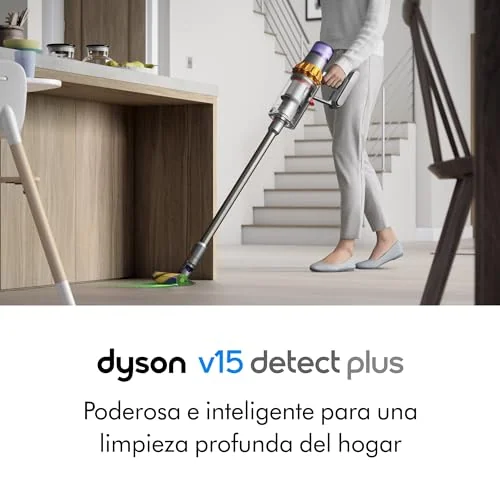
Dyson V15 Detect Plus
At a Glance
| Feature | Shark Cordless Vacuum Cleaner with HEPA Filter, PowerDetect Clean & Empty, Powerful Suction, Auto-Empty System, Pet Hair Pickup, Carpets & Hardfloor, Dark Gray, IP3251 | Dyson V15 Detect Plus Cordless Vacuum, Illumination Reveals dust, 240AW, 3 Power Modes, Up to 60 Minutes,² Deep Cleans Hard Floors and Carpets, Detangles pet Hair, Converts to Handheld |
|---|---|---|
| Price tier | Premium | Premium |
| Format | Compact | — |
| Finish | Dark Gray | Yellow/Nickel |
| Check Price on Amazon | Check Price on Amazon |
The Shark removes chores; the Dyson removes stubborn dirt
Start with the ordinary pass through a mixed home. The Shark’s DuoClean Detect head keeps its soft front roller and primary brushroll on the floor together, so it can collect fine dust, hair and larger crumbs without a trip back to the closet when hard flooring becomes carpet. Its powered forward pull, reverse pickup and automatic surface response make open-floor cleaning feel quick. The MultiFLEX wand then folds at the middle to reach beneath beds and sofas without forcing the user into a deep crouch.
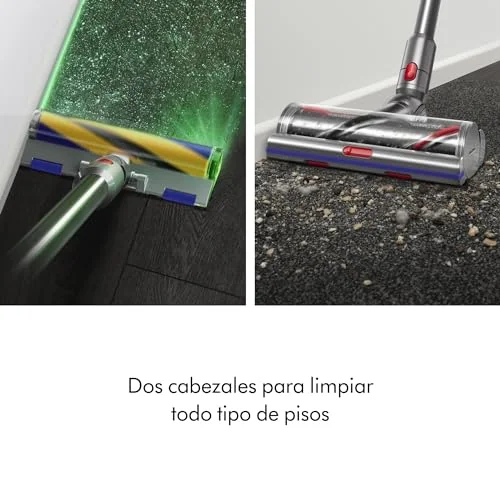
The Dyson divides that work between specialists. Its Fluffy Optic head is the better hard-floor experience because the green illumination casts light across the surface and exposes dust that overhead lighting misses. The Digital Motorbar is the carpet head, with stiff agitation and enough suction to tackle embedded debris. Both are excellent at their intended jobs, but the benefit disappears whenever the wrong head is fitted. A home that alternates between wood, rugs and carpet every few steps turns that specialization into repeated head changes.
| Decision | Shark PowerDetect IP3251 | Dyson V15 Detect Plus | Advantage |
|---|---|---|---|
| Mixed-floor routine | One twin-roller head handles hard floors and conventional carpet. | Two specialized heads deliver their best results only when swapped appropriately. | Shark |
| Hard-floor visibility | Automatic lighting responds to ambient conditions but does not reveal dust like a projected beam. | The Fluffy Optic head makes fine surface dust conspicuous in dimmer conditions. | Dyson |
| Demanding carpet | Strong on ordinary low pile, with weaker evidence on deep pile and embedded fine debris. | The Digital Motorbar combines forceful agitation with excellent controlled carpet results. | Dyson |
| Large crumbs | The soft front roller admits mixed debris without frequent nozzle adjustment. | The Motorbar gates may need opening when larger pieces are pushed ahead. | Shark |
| Under furniture | The folding wand lowers the body while the head stays planted. | The conventional rigid wand requires the user to lower the entire machine. | Shark |
| Above-floor cleaning | The bulky handheld and two basic tools feel secondary to floor use. | The Hair Screw tool and broader accessory system are much more convincing. | Dyson |
| Disposal | The bagless base automatically evacuates the onboard cup after docking. | The point-and-shoot bin must be emptied manually and can release dust. | Shark |
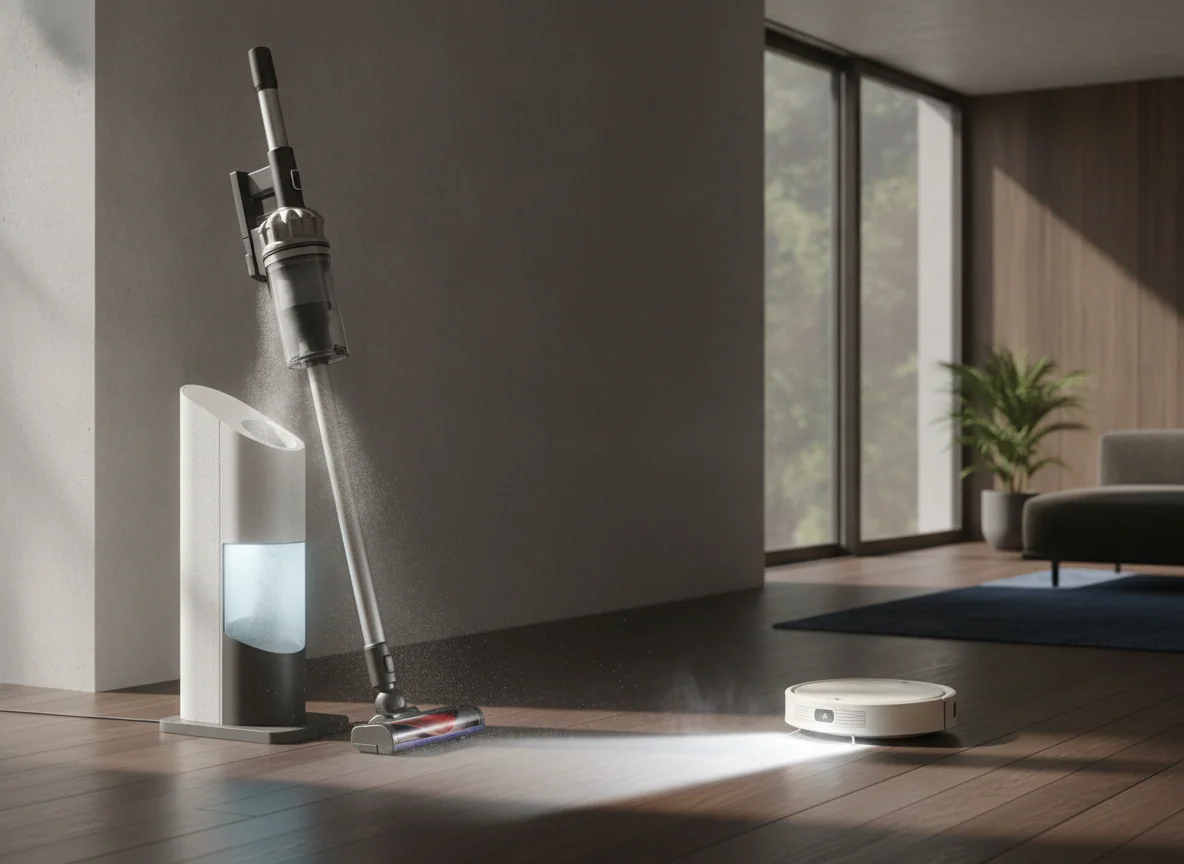
Carpet is where the Dyson earns the inconvenience
The Shark is not weak on carpet. Independent testing recorded 94 percent pickup on low pile, and the head manages surface hair and visible debris very well. Its limitations appear as the carpet becomes deeper or the dirt becomes finer: the same test fell to 54 percent on high pile, while another controlled assessment of the dockless version found only decent embedded-debris pickup and weak suction from cracks. The wide twin-roller nozzle prioritizes debris admission over a tight seal.
The V15 is the safer recommendation for a home where carpet cleaning is the main event rather than one part of a mixed route. Its Motorbar can recover deeply embedded material at a level that makes the cordless format credible as a primary vacuum. That power has a cost: Boost can make the head difficult to push on dense carpet, and loose rugs may lift unless the gates are opened or the machine is dropped into Eco. Greater cleaning force is useful only while the nozzle remains controllable.
Neither machine is ideal for delicate rugs. The Shark lacks both height adjustment and a brushroll-off setting, so lightweight, tasseled or plush rugs can be caught or bog the head down. The Dyson offers a physical gate adjustment and gentler power modes, but it still agitates carpet with a driven brush. Owners of fragile floor coverings should not interpret “automatic” as “safe for every textile.”
Hard floors split convenience from precision
The Shark is the easier machine for a kitchen or open-plan room where dust, cereal and pet hair coexist. Its soft front roller admits bulky pieces while the rear roller continues working on finer debris, and no nozzle change interrupts the route. It is particularly convincing when quick cleans happen several times a day rather than as one formal weekly session.
The Dyson is the more revealing machine. The Fluffy Optic head does not merely decorate the floor with green light; it exposes a film of dust, individual hairs and missed strips that would otherwise survive a casual pass. Its close-fitting soft roller is also gentle and effective on finished hard surfaces. Anyone who wants visual confirmation will find it difficult to surrender, although perfectionists may discover that seeing every speck is a feature with working hours.
Cracks, recessed grout and deep joins complicate the Shark’s hard-floor victory. Its broad head can collect almost everything visible while leaving material below the surface, and its dirt sensor cannot respond to debris that never enters the airway. The Dyson’s stronger sealing and extraction give it the edge on those fine, stubborn tasks. The Shark remains faster for the room; the Dyson is more exacting about the floor.
Pet hair exposes what “anti-tangle” leaves unsaid
Both machines remove pet hair well, and neither is immune to it. The Shark’s primary roller resists wrap impressively, but hair can migrate to the soft roller comb, wheel axles, cup screen, flap and narrow route into the evacuation base. A dock cycle cannot pull out a compressed hair ball that has bridged the cup. Heavy-shedding homes may therefore enjoy cleaner floors while still handling hair elsewhere in the machine.
The Dyson manages hair more completely above the floor. Its conical Hair Screw tool directs strands toward the inlet and is especially useful on upholstery, stairs and pet beds. The main Motorbar copes well with ordinary fur, although very long human hair can still wrap, and dense loads can compact inside the bin or inlet after leaving the roller. “Detangling” describes improved transport, not immunity from inspection.
Choose the Shark when the repeated job is fur and crumbs across the floor. Choose the Dyson when the pet also owns the sofa, stairs and car seats. Readers whose entire decision turns on shedding can compare the wider field in Cord Edge’s guide to the best cordless stick vacuums for pet hair.
The dock is the Shark’s winning feature and its maintenance alibi
Returning the IP3251 to its base empties the onboard cup and restores the charge. That changes the next cleaning session: the machine begins ready rather than presenting yesterday’s dirt as an entrance fee. The bagless dock also avoids replacement bags and contains fine particles well while the system is closed. For someone who postpones cleaning because a small bin must be opened beside the trash after every use, this is the most consequential feature in the comparison.
Automatic emptying does not make ownership hands-off. The base has its own bin and filters, the vacuum has pre-motor and post-motor filters, sensors need wiping, and hair can obstruct the transfer path. Shark’s capacity claim describes a favorable amount of stored debris rather than a reliable emptying schedule. The scented puck also treats air around the dock cycle; it does not deodorize carpet as the floorhead passes.
The Dyson’s disposal is simpler mechanically and messier environmentally. Its ejector pushes debris from the bin, but fine dust can still plume at the trash can, particularly when hair has trapped powder in the load. Emptying outside or deep into a bag is the sensible routine for dust-sensitive users. Excellent filtration during operation does not cancel the exposure created when the container opens.
Both use removable batteries and washable filters, which gives each a plausible service path beyond the first tired battery. The Dyson’s accessory and replacement ecosystem is broader. The Shark’s front soft roller can be removed, but its larger primary brushroll is not designed for easy owner removal, and model-specific attachments or major assemblies can be difficult to source. Buyers who prize repair access should regard that as a genuine mark against the Shark.
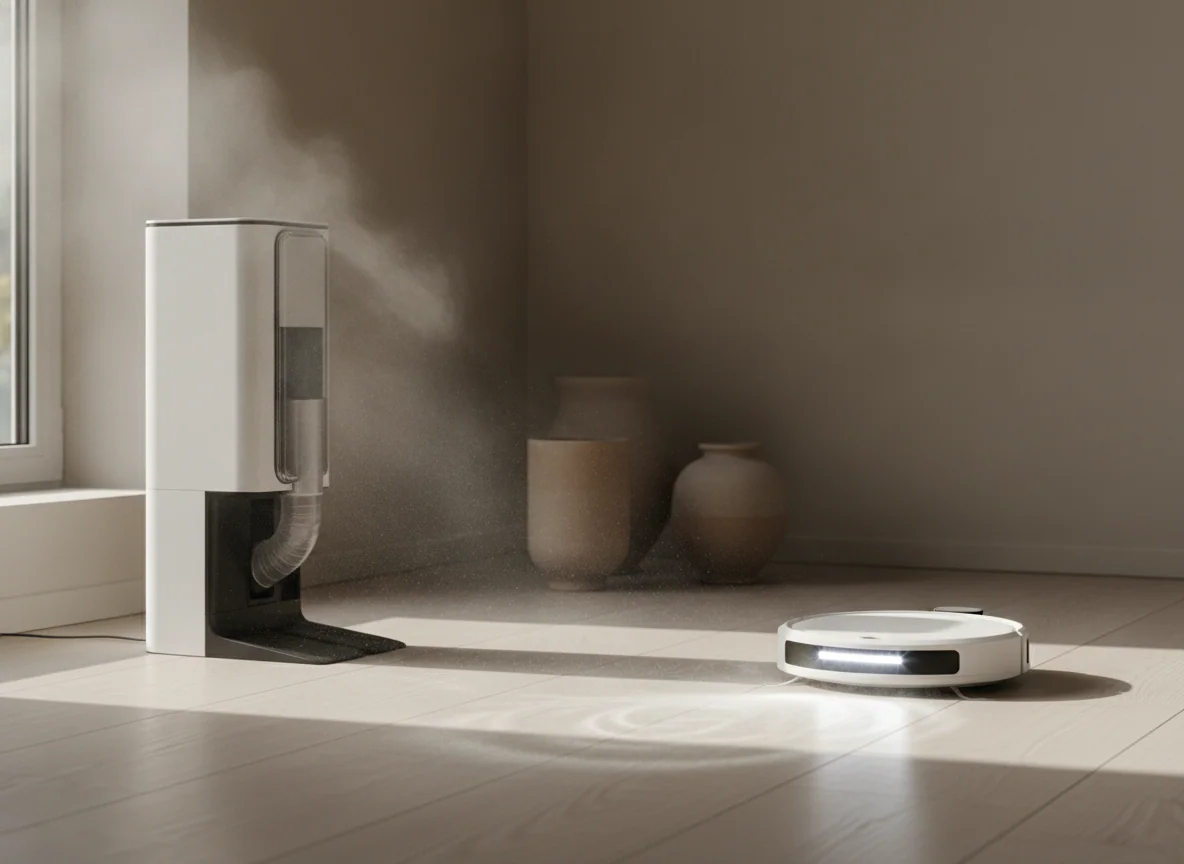
Runtime claims shrink as the work gets harder
Shark advertises up to 70 minutes and Dyson up to 60, but those numbers do not describe a normal whole-home pass with a powered floorhead. The Shark has produced roughly 30 to 40 minutes in Detect-style mixed-floor use and about 12 to 14 minutes in Boost with its powered head. The Dyson can approach its headline figure in Eco under favorable conditions, while Boost with a powered head commonly lasts only about eight to ten minutes.
Auto or Detect is the sensible default on both machines because it spends power where incoming debris or floor resistance justifies it. Boost is a spot treatment, not an operating plan. The Dyson generally recharges faster, at roughly four hours compared with independent Shark measurements extending from about 4.7 to 6.4 hours. A second compatible battery can extend either machine, but neither exact package establishes that one is included.
| Fast mixed-floor cleaning | Shark IP3251, because its one-head route requires fewer interruptions. |
|---|---|
| Deep carpet extraction | Dyson V15, because the Digital Motorbar and stronger sealing are more persuasive on embedded dirt. |
| Hard-floor dust hunting | Dyson V15, because the illuminated soft roller reveals and collects fine surface debris. |
| Daily pet mess | Shark IP3251 for floors, but Dyson V15 for upholstery and stairs. |
| Dust-cup avoidance | Shark IP3251, because the dock removes routine contact with the onboard bin. |
| Lower total weight | Dyson V15, although its top-heavy body and held trigger remain ergonomic objections. |
| Under-bed reach | Shark IP3251, because MultiFLEX bends the wand while the head remains on the floor. |
| Tools and parts ecosystem | Dyson V15, because its attachments are more capable and replacement support is broader. |
The Shark PowerDetect IP3251 is the practical winner for frequent mixed-floor cleaning.
Its auto-empty dock, adaptable twin-roller head and folding wand remove enough routine friction to outweigh the Dyson’s cleaning advantage for most homes.
Its heavy build, demanding filter care, hair-prone evacuation path and poorly accessible primary roller prevent “Clean & Empty” from meaning maintenance-free.
The Dyson V15 Detect Plus is the performance winner for carpet, illuminated hard floors and pet-covered furniture.
Its two excellent floorheads, stronger fine-debris extraction and Hair Screw tool justify the extra handling when cleaning performance is the first priority.
The held trigger, dusty manual emptying, top-heavy body and repeated floorhead swaps make a premium cleaner feel needlessly laborious.

Shark IP3251
Dyson V15 Detect Plus
Buy according to the chore you want to eliminate
The Shark household
Buy the IP3251 if the vacuum will live near the action, run often and cross ordinary hard flooring and carpet in the same session. It suits homes where children or pets generate visible debris, furniture needs regular low-reaching passes and emptying a small cup after every clean has become the reason cleaning gets postponed.
Do not choose it for weak wrists, several flights of stairs, delicate rugs or the expectation that a dock will remove every maintenance task. Its floor steering can feel easy because the powered head carries part of the load, but carrying and handheld work reveal the full weight.
The complete reasoning, including filter identifiers, dock behavior and model-bundle distinctions, is in Cord Edge’s full Shark IP3251 review.
The Dyson household
Buy the V15 Detect Plus if hard-floor illumination will be used often, carpet needs serious agitation or pet hair collects beyond the floor. It also suits buyers who prefer a wider attachment ecosystem and are prepared to trade one-head convenience for specialized tools.
Do not choose it if holding a trigger aggravates the hand, manual bagless emptying is unacceptable or floorhead swapping will cause one of the two heads to remain permanently in a closet. A mostly carpeted home may use the V15’s signature illuminated head so rarely that a simpler Dyson makes more sense.
Cord Edge’s full Dyson V15 Detect Plus review examines its bundle uncertainty, maintenance and long-term ownership evidence, while the Dyson model guide covers less elaborate alternatives.
The Shark wins this comparison because convenience is not a decorative feature on a cordless vacuum; it determines whether the machine is ready when a small mess appears. The Dyson remains the right exception for buyers whose floors demand its specialized heads and stronger extraction. Choose the IP3251 to make cleaning happen more often, or choose the V15 to make each demanding pass count more.
Frequently Asked Questions
Which vacuum is better for a home with both hard floors and carpet?
The Shark is easier for frequent mixed-floor routes because one head handles both surfaces, while the Dyson cleans each surface more precisely when you are willing to swap between its specialized heads.
Which one cleans carpet more deeply?
The Dyson V15 is the stronger choice for embedded carpet debris, although its suction can make dense carpet or loose rugs difficult to push in higher-power settings.
Which one is better for hardwood floors?
The Shark is more convenient for mixed debris and uninterrupted cleaning, but the Dyson’s illuminated Fluffy Optic head is better for revealing and pursuing fine dust on hard floors.
Does the Shark’s dock eliminate manual emptying?
No, the dock usually empties the onboard cup automatically, but compacted hair can obstruct the transfer and the larger bagless base bin must still be emptied by hand.
Is the Dyson noticeably lighter?
The Dyson is lighter overall, but both machines carry substantial weight near the hand and the Dyson adds the strain of a trigger that must remain squeezed.
Which machine is better for pet hair?
The Shark is more convenient for frequent floor pickup, while the Dyson is the better complete pet-hair system because its Hair Screw tool works especially well on stairs, upholstery and pet beds.
Can either vacuum run at maximum power for an hour?
No, both headline runtime claims depend on favorable low-power conditions, while powered Boost cleaning lasts only a small fraction of an hour.
Can the regular Dyson V15 use the Submarine wet-cleaning head?
No, the V15 Detect Plus is a dry vacuum and cannot be converted into the separately programmed V15s Submarine system by adding its wet head.
Do the Shark IP3251 and IP3253 clean differently?
Their core vacuum and dock are effectively the same, with the main differences residing in color and the included crevice and pet-tool bundle.
Which one is easier to maintain?
The Dyson has simpler disposal hardware and broader parts support, while the Shark reduces routine cup emptying but adds dock filters, sensors and a transfer path that also require attention.